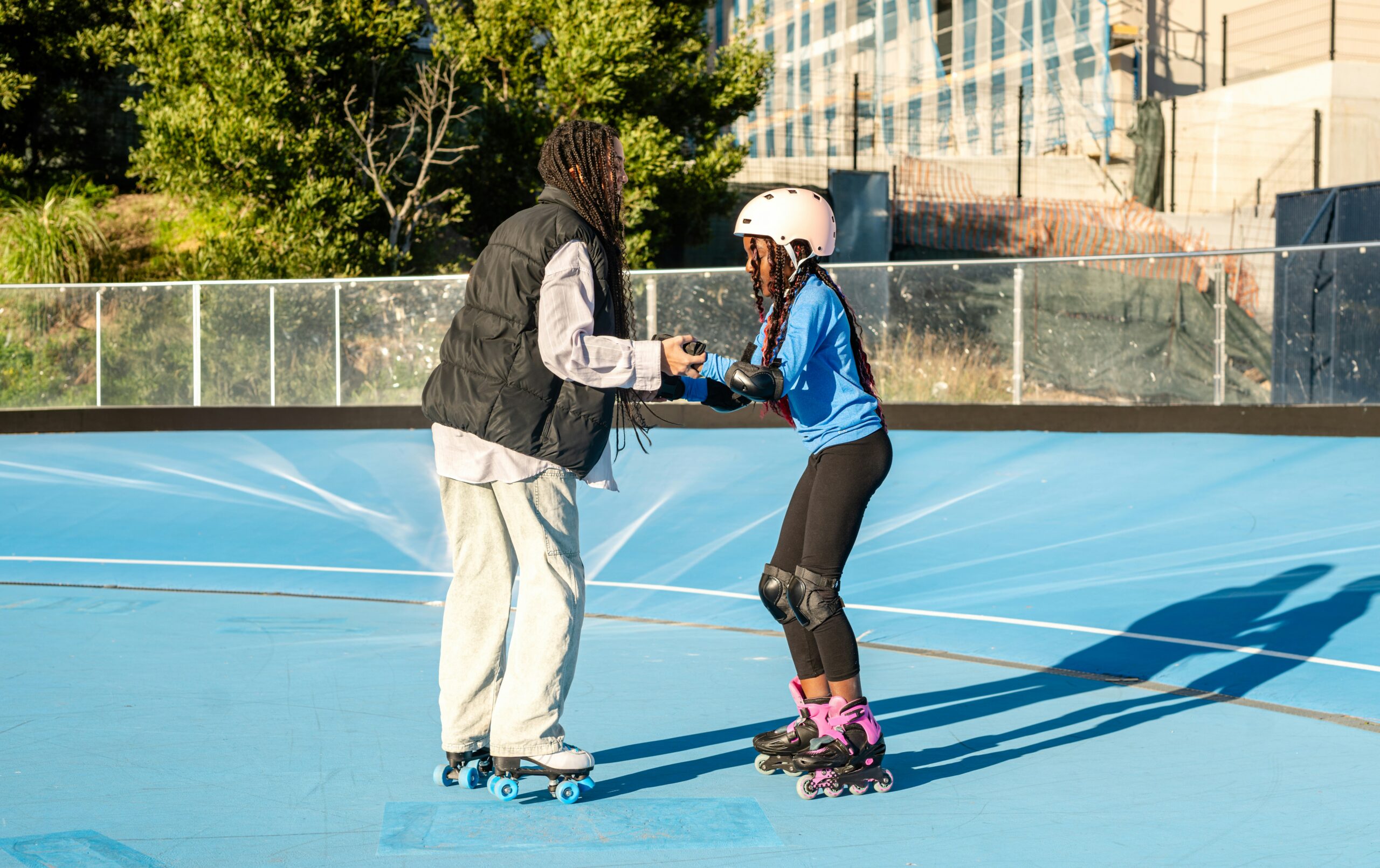
Children need activities that support both physical health and emotional growth. Inline skating gives kids an enjoyable way to stay active while learning balance, coordination, movement control, and persistence.
Beyond fitness, the sport can help children become more comfortable with challenges and develop confidence through steady progress. As kids learn essential skills, they can see clear improvements in their abilities. Therefore, regular practice can support an active lifestyle while creating opportunities for fun, friendship, and personal growth.
Building Confidence Through Small Achievable Goals
Confidence often develops when children experience progress for themselves. Learning to skate can begin with simple goals, such as standing steadily, moving forward, stopping safely, or turning with control. Each successful step gives children a reason to feel proud of their effort. Moreover, these small achievements show kids that difficult skills can become easier through patience and practice.
A child may struggle with balance during the first few sessions, but regular practice can make movement feel more natural. Furthermore, supportive instruction can help children understand that mistakes are part of learning. When kids recognize their own improvement, they can develop a stronger belief in their ability to learn. This confidence can extend beyond skating and influence how they approach sports, school activities, and other new experiences.
Improving Balance, Coordination, and Body Control
Balance plays a major role in a child’s ability to move safely and confidently. Skating requires children to control their posture while moving across a changing surface. They must also coordinate their legs, arms, eyes, and core muscles to maintain stability. Consequently, regular practice can challenge several areas of physical coordination at the same time.
For example, slowing down requires different control than accelerating or turning. Likewise, avoiding an obstacle requires awareness of both the surroundings and body position. Over time, repeated practice can help children react more naturally to changes in movement. Therefore, the activity provides a practical way to develop coordination while keeping children engaged and physically active.
Supporting Strong Physical Development During Childhood
Children need regular movement to support healthy physical development. Active play can strengthen muscles, improve endurance, and encourage better movement habits. This activity uses the legs, hips, core, and upper body while also challenging the cardiovascular system. In addition, skating encourages children to spend time moving instead of remaining inactive for long periods.
Instead of viewing movement as a task, kids can experience it as a skill-based activity with clear goals. Furthermore, sessions can vary in length and intensity based on a child’s age and experience. Parents and instructors can encourage gradual progress rather than pushing children beyond their comfort level. This approach helps make physical activity sustainable and enjoyable as children grow.
Creating Opportunities For Friendship And Social Growth
Group activities can give children valuable opportunities to interact with others. Skating sessions can involve shared practice, games, valuable lessons, or informal challenges. During these experiences, children can learn how to communicate, take turns, encourage teammates, and respect different skill levels. Moreover, working alongside other children can make practice feel more enjoyable and less intimidating.
Social interaction can also help children become more comfortable in new environments. A beginner may initially feel nervous around more experienced skaters, but a supportive group can make the learning process easier. Over time, children may form friendships based on shared interests and activities.
Encouraging Healthy Habits Through Active Outdoor Play
Outdoor activities can give children a useful break from screens and sedentary routines. Time spent practicing movement can provide both physical activity and mental refreshment. Moreover, children often enjoy activities more when they can explore, practice, and play with friends.
Healthy habits become easier to maintain when children enjoy the activity they choose. Parents can support this process by creating consistent opportunities for safe practice. For instance, families can choose suitable skating areas and set aside time for active recreation.
Developing Patience, Persistence, and Problem-Solving Skills
Learning movement skills rarely happens perfectly on the first attempt. Children may lose balance, make awkward turns, or struggle with stopping. However, these moments can become useful learning experiences when adults provide calm and positive support. Kids can identify what went wrong, adjust their technique, and try again.
Persistence can become especially valuable when children work toward new goals. A child who learns to complete a difficult turn after several attempts experiences the connection between effort and improvement. Furthermore, progress does not always happen at the same speed for every child.
Teaching Safety Awareness And Responsible Movement
Safety should remain an important part of every child’s skating experience. Children need to understand how to use protective equipment, follow suitable rules, and recognize their physical limits. Helmets, knee pads, elbow pads, and wrist protection can provide important protection during practice.
Looking ahead, maintaining a suitable distance from others and avoiding unsafe areas can reduce unnecessary risks. Furthermore, children should understand that confidence does not mean taking avoidable chances. Instead, real progress comes from developing skills at a suitable pace. By connecting physical ability with safety awareness, adults can help children enjoy the activity responsibly.
Making Physical Activity Enjoyable For Long Term Growth
Enjoyment can strongly influence whether children continue an activity over time. When kids have fun while learning, they are more likely to practice regularly and stay interested. Parents can help by celebrating effort rather than focusing only on performance.
Long-term participation can provide benefits that extend beyond physical fitness. Children can develop stronger movement skills, greater confidence, better coordination, and useful social habits through consistent participation. Furthermore, the ability to set goals and work toward gradual improvement can become a valuable life skill.