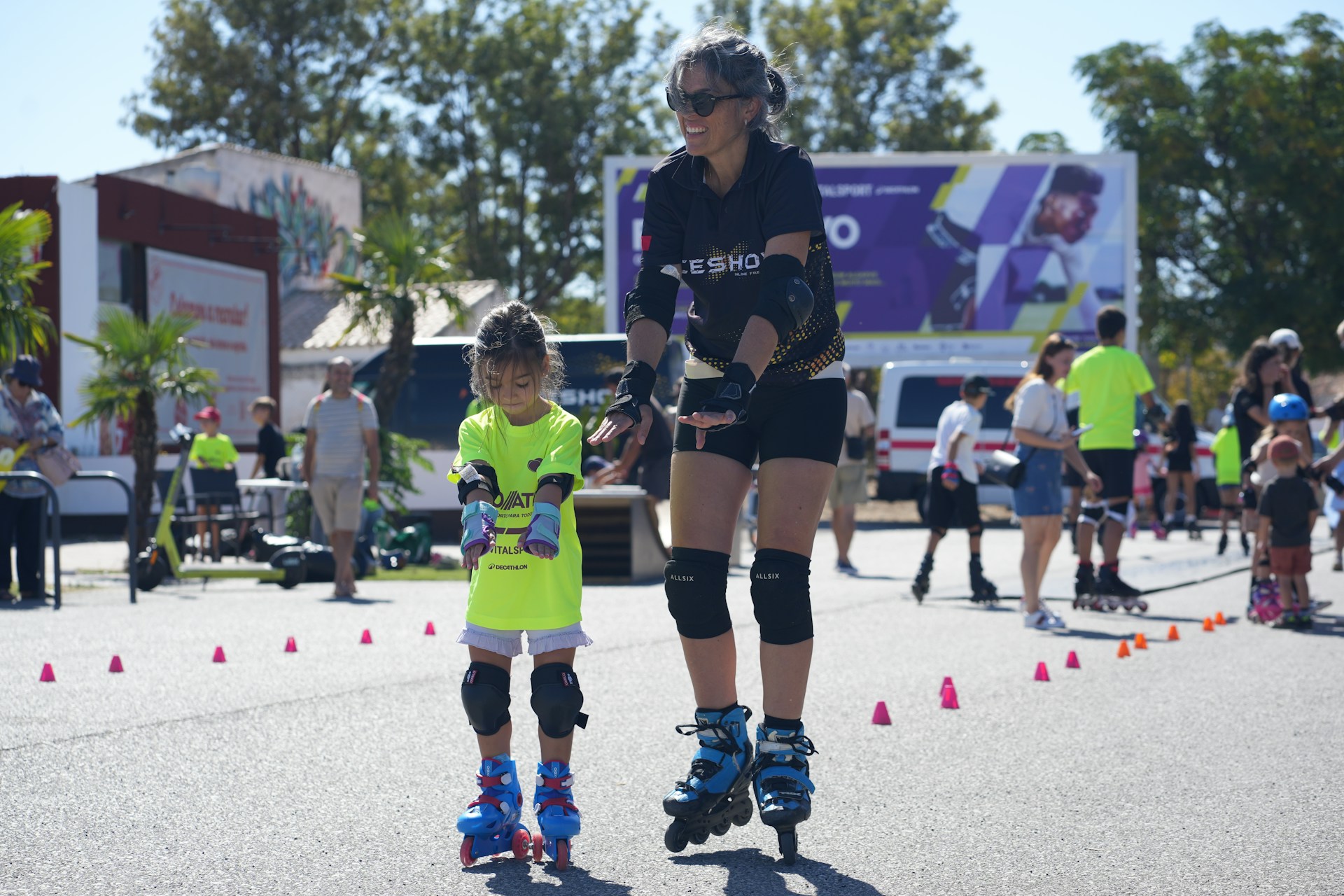
Inline skating gives children more than a fun way to stay active. It helps them develop useful physical and social skills while building a stronger sense of independence. Through regular youth skating activities, kids can improve balance, learn to handle challenges, and connect with others in a positive setting. Each session gives them a chance to practice, make mistakes, and see real progress. As a result, skating can become both an enjoyable hobby and a valuable part of healthy childhood development.
Parents often want activities that keep children moving without making exercise feel forced. Inline skating works well because kids focus on having fun while their bodies stay active. At the same time, they learn patience, focus, and control. These benefits can support them both on and off the skating floor.
Courage Grows Through Practice
Learning to skate can feel difficult at first. A child may struggle to stand, move forward, or stop safely. However, those early challenges can help children become more comfortable with trying new things.
Each small success builds a sense of achievement. For example, a child may feel proud after completing one lap without help. Later, that same child may learn to turn or stop with more control. Because progress is easy to notice, kids can see that effort leads to improvement.
Parents and instructors can strengthen this lesson by praising effort instead of expecting perfection. As children keep practicing, they often become more willing to face other challenges in school, sports, and daily life.
Balance Supports Everyday Movement
Inline skating requires children to control their posture, feet, legs, and body position. They must shift their weight while moving and adjust quickly when changing direction. Therefore, skating naturally helps improve balance.
Better balance can support many everyday activities. Running, climbing, jumping, and playing other sports all require body control. As children become more stable on skates, they may also feel more confident during other forms of movement.
In addition, skating teaches kids to notice how their bodies react. They begin to understand how small changes in position affect speed and direction. This awareness can make movement feel easier and more natural.
Focus Improves During Active Play
Children must stay alert while skating. They watch the path ahead, notice other skaters, and control their speed. Because several things happen at once, skating encourages active concentration.
At first, a beginner may focus only on staying upright. However, as basic skills improve, the child can pay attention to more details. They may plan turns, avoid crowded areas, or adjust their pace.
This kind of focus can feel more enjoyable than sitting still for long periods. Therefore, skating gives energetic children a practical way to strengthen attention while staying physically active.
Control Develops With Repetition
Coordination improves when different parts of the body work together. During skating, children use their legs for movement, arms for balance, and eyes for direction. These actions happen at the same time.
Regular kids’ coordination exercises within skating sessions can help movement become smoother. A beginner may start with short, uneven steps. After more practice, those steps often turn into controlled glides.
As coordination improves, children can begin learning more advanced techniques. They may turn more smoothly, change direction faster, or control their speed with greater ease. Each new skill builds on what they have already learned.
Persistence Turns Mistakes Into Lessons
Every child will face difficult moments while learning to skate. A new move may feel confusing, or progress may seem slow. Still, these moments can teach children how to keep going.
Instead of giving up, kids can learn to break a difficult skill into smaller steps. Instructors can offer guidance, while parents can remind them how much they have improved. Gradually, frustration can become motivation.
This lesson also applies beyond skating. Schoolwork, hobbies, and friendships all require patience. Therefore, learning to continue after setbacks can help children develop a stronger approach to future challenges.
Friendships Form Through Shared Fun
Skating brings children together around a common activity. Some arrive with friends, while others meet new people during lessons or open sessions. Because they already share an interest, starting conversations can feel easier.
Children often encourage each other during practice. One child may celebrate another skater’s progress, while someone else may offer helpful advice. These simple interactions can create a friendly and supportive atmosphere.
Group skating can also help children who feel shy in new social settings. The activity gives them something to focus on together, which can make communication feel more natural.
Respect Becomes Part of the Experience
A safe skating environment depends on cooperation. Children need to notice other people, follow rules, and give beginners enough space. Therefore, skating teaches respect in a practical way.
More experienced skaters learn to be patient with those who move slowly. New skaters learn to follow directions and stay aware of others. These habits help everyone enjoy the activity safely.
Children also discover that everyone improves at a different pace. This can teach them to avoid unfair comparisons. Instead, they learn to appreciate progress, effort, and individual strengths.
Belonging Encourages Lifelong Activity
Through active social recreation, children can connect exercise with fun, friendship, and achievement. That connection matters because positive early experiences with movement can make kids more willing to stay active as they grow. Instead of seeing exercise as a task, they may begin to view it as something enjoyable and rewarding.
Inline skating supports physical growth, personal effort, and meaningful social interaction at the same time. Children can become more comfortable with challenges, improve body control, and build relationships with others. Over time, these experiences can shape healthier habits and stronger social skills that continue far beyond the skating rink.